close
Choose Your Site
Global
Social Media
Views: 0 Author: Site Editor Publish Time: 2026-04-09 Origin: Site


Is your Door Lock really secure enough today? Many people overlook how much the right choice matters. In this article, we explore 16 Door Lock types for homes and offices. You will learn how each one works and which fits your needs best.
A deadbolt Door Lock is designed for high-security applications, especially for exterior doors. It uses a solid metal bolt that extends deep into the door frame, creating strong resistance against forced entry. Unlike spring-based locks, this type does not rely on internal tension, which makes it harder to manipulate or break.
This Door Lock is commonly installed on front doors, office entrances, and other critical access points. Many users pair it with a handle or lever lock to create a dual-layer security setup. Modern versions may also integrate with smart systems, combining traditional strength with digital convenience.
Key characteristics include:
Solid bolt structure increases resistance against impact and prying attempts
Independent locking mechanism improves reliability over time
Compatibility with both traditional keys and smart access solutions
A deadbolt Door Lock is widely trusted for security, but it works best when used in the right scenario.
Pros:
High resistance to forced entry makes it ideal for main entrances
Simple internal structure reduces the risk of mechanical failure
Works well as a primary security layer in both homes and offices
Limitations:
Manual operation may slow down frequent entry and exit
Misalignment between door and frame can affect performance
Less convenient compared to fully automated smart lock systems
A knob Door Lock combines the handle and locking mechanism into a single unit. It is one of the most common lock types found in residential interiors. The lock is activated by turning the knob, making it simple and easy to use.
This Door Lock type is mainly used for privacy rather than security. Because the locking mechanism sits inside the knob, it is more vulnerable to force compared to reinforced locks. For that reason, it is rarely recommended as the main lock for entry doors.
Typical applications include bedrooms, bathrooms, and light-use office rooms. It fits situations where convenience matters more than strong protection.
Knob Door Locks are practical for interior use, but they have clear security limitations.
Pros:
Simple design allows quick installation and easy replacement
Suitable for interior spaces that require basic privacy
Cost-effective option for large-scale residential or office use
Limitations:
Weak resistance to forced entry compared to stronger Door Lock types
Not suitable as a primary lock for exterior doors
Internal mechanism can wear out faster with frequent use
A lever handle Door Lock uses a horizontal lever instead of a round knob. This design makes it easier to operate, especially in situations where quick access is needed. A simple downward push opens the door, which improves usability in both homes and commercial spaces.
This Door Lock type is widely used in offices, public buildings, and modern homes. Accessibility plays a big role in its popularity, since it can be operated without tight grip strength. Many installations combine it with additional locks to improve overall security.
Common uses include interior doors, office entrances, and high-traffic areas where smooth operation is important.
Lever handle Door Locks offer convenience and accessibility, but they are not always strong enough on their own.
Pros:
Easy operation improves user experience in daily use
Suitable for environments with frequent door movement
Better accessibility for children, elderly users, or busy workspaces
Limitations:
Lower security compared to reinforced Door Lock systems
External pressure may open the handle more easily
Often requires an additional lock for high-security applications
A mortise Door Lock is installed inside a pocket cut into the door, rather than mounted on the surface. This internal structure allows the lock to include multiple components, such as a latch and a deadbolt, within a single unit.
This type of Door Lock is known for strength and durability. It is commonly used in commercial buildings, offices, and high-end residential projects. The internal design makes it more resistant to tampering and external damage.
Because of its complexity, installation requires precision and is usually handled by professionals. However, the result is a highly secure and long-lasting locking solution.
Mortise Door Locks are built for performance, but they are not always necessary for every door.
Pros:
Strong internal construction improves long-term durability
Multi-function design combines different locking features
Suitable for heavy-duty use in commercial and high-traffic environments
Limitations:
Installation process is more complex than standard Door Lock types
Higher cost compared to simpler lock systems
Not ideal for lightweight interior doors where high security is unnecessary
A cylinder Door Lock is one of the most widely used locking mechanisms in both homes and offices. It works through a replaceable cylinder core, where the key interacts with internal pins to control access. Because the cylinder can be removed and replaced independently, it offers flexibility for maintenance and upgrades.
You will often see this Door Lock in entry doors, apartment units, and office buildings. It is commonly used together with handles or deadbolts, forming a complete locking system. Many modern designs also support integration into smart lock setups, making it adaptable for evolving security needs.
Cylinder Door Locks are flexible and widely used, but performance depends heavily on the cylinder quality.
Pros:
Easy replacement makes maintenance more efficient over time
Compatible design fits many door types and hardware systems
Supports upgrades to higher-security or smart configurations
Limitations:
Lower-quality cylinders can be vulnerable to picking or bumping
Security level varies depending on materials and design
Requires proper installation to maintain alignment and strength
A cam lock is a compact Door Lock designed for securing cabinets, drawers, lockers, and small enclosures. It uses a rotating metal cam attached to the cylinder, which locks or unlocks when the key is turned. This simple mechanism makes it practical for storage applications rather than full-size doors.
In offices and homes, cam locks are often used for file cabinets, mailboxes, and equipment panels. While they are not meant for high-security entry points, they play an important role in protecting personal or sensitive items داخل controlled spaces.
Cam locks serve specific purposes, but they are not designed for general door security.
Pros:
Compact size fits small spaces where standard Door Lock types cannot be used
Simple mechanism allows quick installation and replacement
Cost-effective solution for securing storage units
Limitations:
Limited security compared to full-size Door Lock systems
Not suitable for exterior doors or high-risk areas
Key control may be less advanced in basic designs
A padlock is a portable Door Lock that is not permanently attached to a door or surface. It uses a shackle that passes through a hasp or chain, securing gates, storage units, or temporary access points. Because of its portability, it is widely used in both residential and commercial settings.
Padlocks come in different forms, including keyed and combination types. They are commonly used for outdoor gates, warehouses, and equipment storage. Some designs are weather-resistant, making them suitable for long-term outdoor use.
Padlocks are versatile, but they are not always the strongest solution for fixed door security.
Pros:
Portable design allows use across multiple applications
Easy to install without permanent modification
Available in a wide range of sizes and security levels
Limitations:
Security depends heavily on material and build quality
Can be vulnerable if paired with weak hasps or chains
Less convenient for frequent access compared to fixed Door Lock systems
A rim Door Lock is mounted on the surface of the door rather than inside it. The locking mechanism sits on the interior side, while a key cylinder is installed on the exterior. This design makes installation easier compared to embedded locks.
Rim locks are often used in older buildings or as secondary security layers. They can be added to existing doors without major modifications. In some cases, they are combined with other locks to enhance overall protection.
Rim Door Locks offer flexibility in installation, but they are not always the primary choice for modern security.
Pros:
Surface mounting simplifies installation and replacement
Useful as an additional security layer alongside other locks
Works well for retrofitting older doors
Limitations:
Exposed components may be more vulnerable to tampering
Not as strong as embedded Door Lock systems
Appearance may not match modern design preferences
A barrel bolt Door Lock is a simple sliding mechanism designed for basic security and privacy. It uses a metal rod, often called a bolt, which slides into a catch or socket fixed on the door frame. This design makes it easy to operate and quick to install on various door types.
You will often see this Door Lock used on interior doors, gates, or secondary entry points. It works best when paired with another locking system, especially for exterior use. Many users rely on it as an extra layer rather than a primary security solution. In hardware systems like those offered by FOACHI, this type fits well into accessory-level security, supporting overall door control without adding complexity.
Barrel bolt Door Locks are useful for basic control, but they are not designed for strong protection.
Pros:
Simple structure makes installation quick and cost-effective
Reliable operation due to minimal moving parts
Useful as an additional security layer for doors or gates
Limitations:
Limited resistance to forced entry compared to advanced Door Lock types
Not suitable as a primary lock for main entrances
Manual operation may not fit high-frequency access needs
A chain Door Lock is designed to allow partial door opening while still maintaining a level of security. It consists of a chain attached to the door and a track or catch fixed on the frame. This setup lets users open the door slightly to check outside before granting full access.
This Door Lock is commonly used in residential settings, especially apartments and homes. It provides a balance between visibility and safety. In offices, it may also be used in restricted areas where controlled interaction is needed. It is not meant to replace a primary lock, but it adds an extra layer of control.
Chain Door Locks improve awareness and control, but they are not strong security devices.
Pros:
Allows partial opening for safe interaction with visitors
Easy to install on most door types
Works well as an additional safety feature
Limitations:
Limited strength under force compared to reinforced Door Lock systems
Not suitable for high-security environments
Chain components may wear over time with frequent use
A sliding Door Lock is specifically designed for doors that move horizontally rather than swing open. It secures the door by locking the sliding panel into place, often using latches, hooks, or integrated locking mechanisms.
This Door Lock is commonly used for patio doors, glass doors, and office partitions. Because sliding doors have a different structure, standard locks cannot provide effective security. This specialized design ensures the door stays aligned and locked during use. FOACHI hardware solutions often consider door type compatibility, making this lock style essential for modern architectural layouts.
Sliding Door Locks are specialized, which makes them effective but also limited in scope.
Pros:
Designed specifically for sliding mechanisms, improving fit and function
Maintains smooth door operation while adding security
Suitable for modern residential and office layouts
Limitations:
Not compatible with traditional swing doors
Security depends on door frame strength and installation
May require additional locks for higher security needs
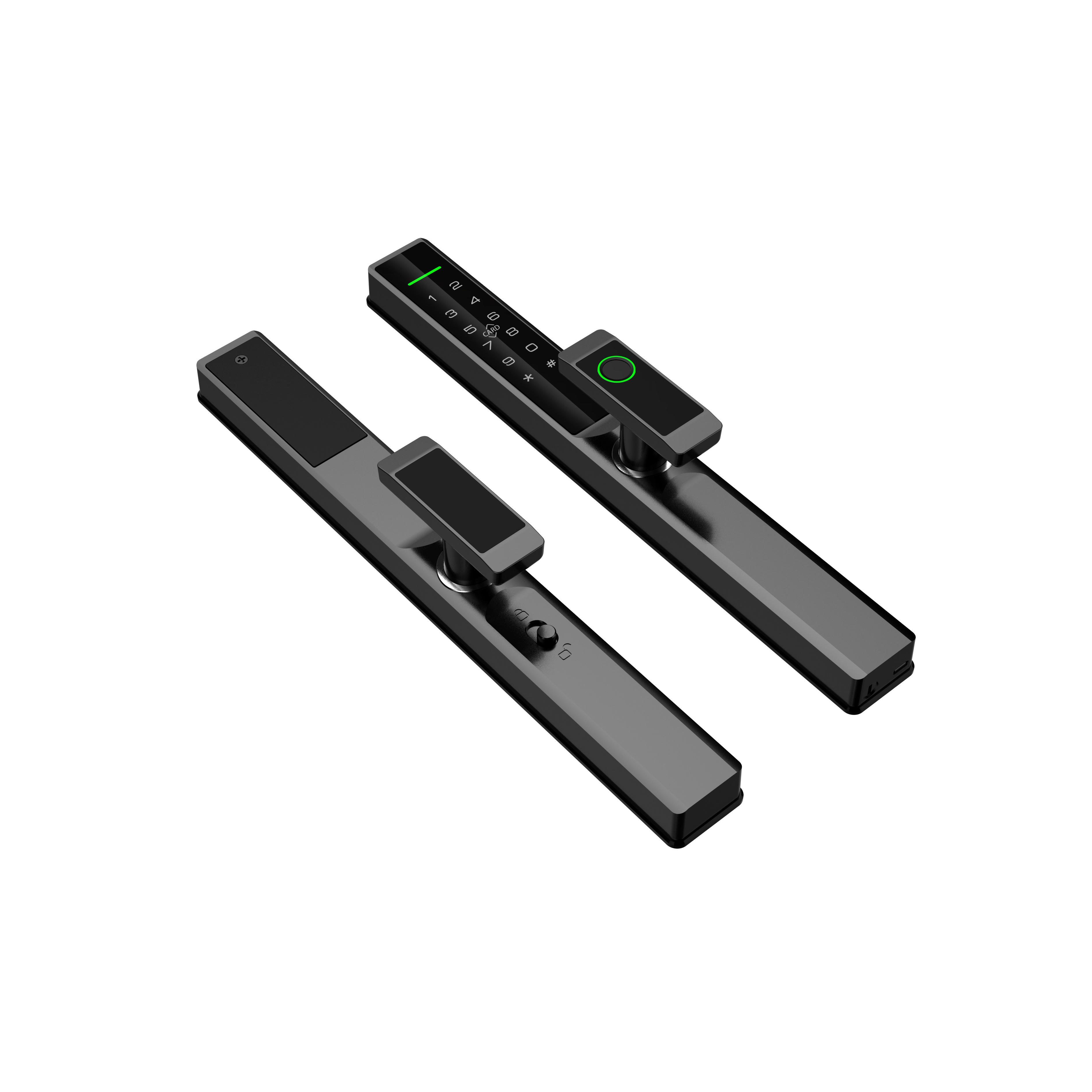
A keypad Door Lock allows access using a numeric code instead of a physical key. Users enter a PIN on a keypad to unlock the door, which removes the need for carrying keys. This makes it highly convenient for homes, offices, and rental properties.
This Door Lock type is popular in modern environments where access needs to be shared or managed. Codes can be updated, changed, or assigned to different users. In FOACHI smart lock systems, keypad functionality is often combined with other unlocking methods such as fingerprint or card access, creating a flexible multi-access solution.
Keypad Door Locks offer convenience and control, but they require proper management to stay effective.
Pros:
Eliminates the need for physical keys in daily operation
Easy to share or update access codes for different users
Suitable for homes, offices, and rental properties
Limitations:
Code security depends on user habits and regular updates
Requires power source, usually batteries
May need backup access methods in case of system failure
This guide explains 16 Door Lock types for homes and offices, helping users match security and convenience needs. FOACHI offers reliable door hardware, including smart locks and accessories, combining durability, flexible access methods, and consistent quality to support modern residential and commercial applications.
A: A deadbolt Door Lock offers strong security for main entrances.
A: A smart Door Lock allows keyless entry and flexible user control.
A: A keypad Door Lock removes keys and supports shared access.
A: A knob Door Lock is better for interior privacy, not main security.
A: Choose a Door Lock based on door use, security level, and access needs.