close
Choose Your Site
Global
Social Media
Views: 0 Author: Site Editor Publish Time: 2025-12-26 Origin: Site
Did you know that over 60 million Americans live with a disability? Ensuring that public spaces are accessible to everyone is crucial. The Americans with Disabilities Act (ADA) mandates compliance for doors hardware, allowing people with disabilities to navigate spaces safely and independently. In this guide, we’ll explore the importance of ADA compliance, key door hardware requirements, and practical tips for businesses to improve accessibility. You’ll learn how to select the right ADA-compliant doors hardware and how to maintain it for ongoing compliance.
For ADA compliance, clear width must be at least 32 inches when the door is open at 90 degrees. This clearance is essential for wheelchair users and people with mobility aids to navigate through easily. Maneuvering space around the door ensures that users can approach, open, and pass through the door comfortably. Adequate space on both sides of the door is crucial for smooth operation.
The ADA specifies that thresholds must not exceed 0.5 inches for exterior doors and 0.25 inches for interior doors to prevent tripping hazards. Height requirements ensure that door openings are accessible, with a minimum clearance of 80 inches from the ground, making it suitable for all users, including those in wheelchairs.
To meet ADA standards, entrances should have clear pathways with minimal obstacles to ensure ease of access. These pathways should provide smooth transitions between the exterior and interior doors. Clear markings and signs that guide users to accessible doors also contribute to better user experience and compliance with ADA regulations.
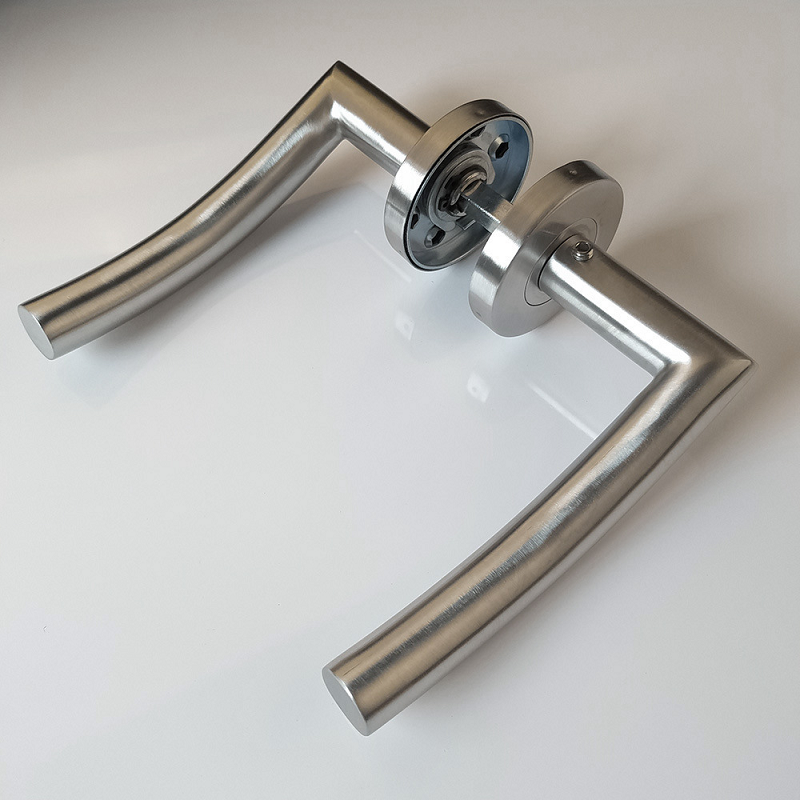
Lever handles and push-type mechanisms are ideal for ADA-compliant doors. These hardware types ensure ease of operation for individuals with limited hand strength or dexterity. Handles must be operable with a closed fist or loose grip to avoid requiring tight grasping or pinching. Push-type hardware further minimizes the effort required to open doors, increasing accessibility.
ADA standards require door handles to be positioned between 34 to 48 inches above the floor to accommodate all users, including wheelchair-bound individuals. In addition, interior doors must require no more than 5 pounds of force to open, and exterior doors should not exceed 8.5 pounds, making doors easier to open for everyone.
ADA-compliant doors hardware must be made from durable, easy-to-grip materials like stainless steel or brass. The texture of the material should ensure a secure grip without sharp edges that could cause injury. It is also important for the hardware to resist corrosion and maintain durability over time, especially in high-traffic public spaces.
Tip: Select hardware that minimizes physical effort and is easy to operate across different users.
For manual swinging doors, adequate maneuvering clearance is necessary. On the push side, there must be at least 60 inches of clearance in front and 18 inches beside the latch side. On the pull side, the clearance should be 48 inches in front and 12 inches beside the latch side to allow smooth operation for those using wheelchairs and other mobility aids.
Sliding doors are an excellent option for spaces with limited maneuvering space since they don’t require the clearance needed for swinging doors. Folding doors, although space-saving, should meet similar clearance guidelines to ensure that they don’t obstruct movement, providing both easy access and proper functionality for individuals with disabilities.
When using double doors or doors in series, the space between them must be wide enough for users to pass through. A minimum of 48 inches between the doors is recommended, with each door fully opening to provide clear passage. This requirement ensures that people with mobility aids can pass through easily without obstruction.
Tip: Ensure that double doors open with minimal effort to meet ADA standards.
According to ADA guidelines, doors with automatic closers should take at least 5 seconds to close from 90 degrees to 12 degrees. This ensures users have enough time to pass through without being hindered by a door that closes too quickly. The closing speed also helps prevent the door from abruptly shutting on individuals, particularly those with slower mobility.
The speed at which a door closes can pose a risk of injury. Spring hinges or automatic closers should be adjusted to slow down the door's closing mechanism to prevent accidents. Proper speed control is essential to ensure that the door does not close too quickly, giving users enough time to pass through safely without being obstructed.
Regularly inspect door closers to ensure they are functioning correctly. Over time, the mechanisms can wear or become misadjusted, which may result in doors closing too quickly. Adjusting them to comply with ADA guidelines ensures a slow, controlled closure that provides ample time for users to pass through safely. Proper adjustment also helps prevent accidents, reduces the risk of injury, and enhances safety and accessibility for all individuals, especially those with limited mobility.
Locks on ADA-compliant doors must be operable with a closed fist, avoiding the need for pinching, twisting, or tight gripping. Lever locks or push-button mechanisms are ideal for individuals with limited hand strength. These locks provide ease of access while also ensuring security.
Handles should be lever-shaped, designed for ease of operation without requiring fine motor skills or excessive force. Round knobs are not ADA-compliant because they require twisting, which can be challenging for individuals with limited hand strength or dexterity. For better accessibility, opt for U-shaped pulls or lever handles, as they can be operated with a loose grip or closed fist, making them ideal for people with various physical impairments or disabilities.
When selecting ADA-compliant hardware, it’s crucial to choose options that accommodate individuals with a range of disabilities, ensuring they are easy to operate for everyone. Focus on features like durability, minimal effort to operate, and user-friendliness. Prioritize lever-shaped handles and push-button locks, as these require little to no fine motor skills, making them ideal for individuals with limited dexterity or strength, while also ensuring long-lasting performance in high-traffic areas.
The selection of the right door type is crucial for ADA compliance. Swinging doors are versatile but require adequate maneuvering space. Sliding doors, on the other hand, are great for tight spaces and still comply with ADA standards. Always consider the flow of traffic and user needs when choosing doors.
For older facilities, retrofitting doors to meet ADA standards may involve installing accessible hardware, adjusting the threshold height, and widening doorways where necessary. Small updates like adding kickplates or using wide-throw hinges can significantly improve accessibility.
Regular maintenance and inspections are essential for ensuring your doors hardware remains compliant. Check the door closers for proper operation, ensure thresholds are within compliance, and test handles and locks to make sure they meet ADA specifications.
Tip: Establish a routine inspection schedule to maintain accessibility standards and avoid potential non-compliance issues.
| Requirement | Standard for ADA Compliance |
|---|---|
| Clear Width | Minimum of 32 inches when door is open at 90 degrees |
| Maneuvering Space (Push side) | 60 inches in front, 18 inches beside latch side |
| Maneuvering Space (Pull side) | 48 inches in front, 12 inches beside latch side |
| Threshold Height | Maximum 0.5 inches for exterior doors, 0.25 inches for interior |
| Maximum Force to Operate Door | 5 pounds for interior, 8.5 pounds for exterior |
| Handle Height | Between 34 to 48 inches above floor |
| Closing Speed | Must take at least 5 seconds from 90° to 12° |
| Locking Mechanism | Must be operable with a closed fist, no pinching or twisting |
Ensuring ADA-compliant doors hardware is crucial for accessibility and legal compliance. FOACHI offers durable, easy-to-operate solutions that help businesses meet key requirements like clearance and maneuvering space, creating safe and inclusive environments for all. If your business hasn’t ensured ADA compliance, it’s time to assess your doors hardware to improve accessibility and provide a safer environment for everyone.
A: ADA-compliant doors hardware refers to door components designed to meet the accessibility standards outlined by the Americans with Disabilities Act. This includes features like lever handles, push-type mechanisms, and easy-to-operate locks that cater to individuals with varying physical disabilities.
A: ADA-compliant doors hardware ensures that all individuals, including those with disabilities, can access public spaces safely and independently. Compliance reduces barriers, promotes inclusivity, and helps businesses avoid legal penalties.
A: When selecting ADA-compliant doors hardware, prioritize ease of use, durability, and minimal effort to operate. Look for lever handles, push-button locks, and materials that are both functional and easy to grip for users with limited dexterity or strength.
A: Using ADA-compliant doors hardware improves accessibility, reduces the risk of accidents, and ensures compliance with legal standards. It enhances safety for all users, particularly those with mobility impairments, while fostering an inclusive environment.
A: The cost of ADA-compliant doors hardware can vary based on the type, material, and features required. On average, prices range from $20 to $200 per unit, depending on factors like quality, design, and installation complexity.
A: Key features of ADA-compliant doors hardware include lever handles, push-type mechanisms, and low-force operation. These features ensure that doors are easy to open and close without requiring excessive effort or fine motor skills, catering to users with disabilities.